An Application of Shari’ah Law In Curbing Corruption In Contemporary Nigeria
DOI:
https://doi.org/10.61166/arfa.v4i1.152Keywords:
Corruption, Nigeria, Development, Causes of Corruption, Anti-Corruption Measures.Abstract
Over the years, corruption has been the bane of development in Nigeria. This menace has eaten deep into all sectors in the country. Through, corruption has always been a serious problem in most developing countries most especially in AFRICA, Nigeria is not an exception. Nigeria, corruption has eaten deep into education, healthy, judiciary, political leaders among others. The paper adopted historical and sociological research approaches for data gathering and analysis. The paper discovered that, even religion houses are left out in terms of corruption. It was also unfolded that unemployment, lack of transparency, fear of poverty and greed are among the major factors that enhance and encourage corruption in Nigeria. Though, many governments in the country have put one measure or another in place to fight corruption, but it seems the measure put in place has not yielded much result, as many political office holders are still found carting away millions and billions of Naira on yearly basis. The paper therefore recommended stiffer punishment for anybody found carting away public funds in Nigeria.
Downloads
References
Usman Mohammad, “Corruption in Nigeria: A Challenge to Sustainable Development in the Fourth Republic”, European Scientific Journal Vol. 9, (2013): 119.
S.I. Onimajesin, “Corruption in Nigeria: Implications, Complications and Control: Ilorin Journal of Sociology Vol. 2, No. 2, (2006); 179.
D. Philip, “Corruption as a Bane for Under-Development in Nigeria: Issues and Challenges.” International Affairs and Global Strategy Vol. 15, (2013):77
O.L. Ugwu, “The Impact and Consequences of Corruption on the Nigeria Society and Economy. “International Journal of Arts and Humanities Vol. No. 4, (2015): 189.
Sayed Malik, “Shari’ah: A Legal System and a Way of Life.” In (ed), Oloyede Abdul-Rahmon, Perspective in Islamic Law and Jurisprudence (Ibadan, Nigeria, National Association of Muslim Law Students, 2001), 26.
D.E. Keeper, Systemic Corruption in Nigeria: A Threat to Sustainable Development,” Proceedings of the 1st International Technology, Education and International Conference, African Society for Scientific Research (ASSR), 172.
Udodilim Ijeoma, “Exam Malpractice: The Worst Form of Corruption.” Retrieved from http://m:guardian.ng/opinion/exam-malpratice-the-worst-form-of-corruption/ Accessed on September 12, 2016, at 4:03am.
Retireved from http://sunnah.com/bukhari/93/14. Accessed on January 23, 2017.
Hadi Atanda, “Corruption, The Bane of Good Governance: Islamic Panacea.” A Paper Presented at the Second National Conference on Islam in Nigeria COIN, Osogbo, (2015), 8.
Jamal Badawi, Islamic Teachings, (Halifax: Islamic Information Foundation, 1982, Album 4, 22.
Zafar Iqbal and Mervyn Lewis, “Governance and Corruption: Can Islamic Societies and the West Learn from Each Other? American Journal of Islamic Social Science, Vol. 9, No. 2, (2001): 8.
Retrieved from http://easyquranfoundation.com/?page-id=904. Accessed on February 16, 2017.
Yusuf Ali, “The Challenges of Fighting Corruption in Nigeria: Islamic Perspective,” A Lecture delivered at the 2016/2017 Muslim Legal Year Service, (September, 26th, 2016), Ogun State, Nigeria, 12.
Philip Ostein, “Shari’ah Implentation in Northern Nigeria, 1999/2006; A Sourcebook produced by the council of Ulama and presented to the Borno State Government, Nigeria, on (June, 2001), 19.
Al-Awwal. M.S., “Punishment in Islamic Law: a Comparative Study (USA: American Trust Publications, 1985), 7.
J. Hussein, Islamic Law and Society (Sydney: Federation Press, 1999), 134.
Abdur – Rahman Doi, “Shariah: The Islamic Law (London: Taha Publishers, 1984), 17.
Ali, Abdullahi Yusuf, “The Holy Qur’an, Arabic Text with English Translation and Commentary, Riyadh, Darus – Salaam Publications, 2002.
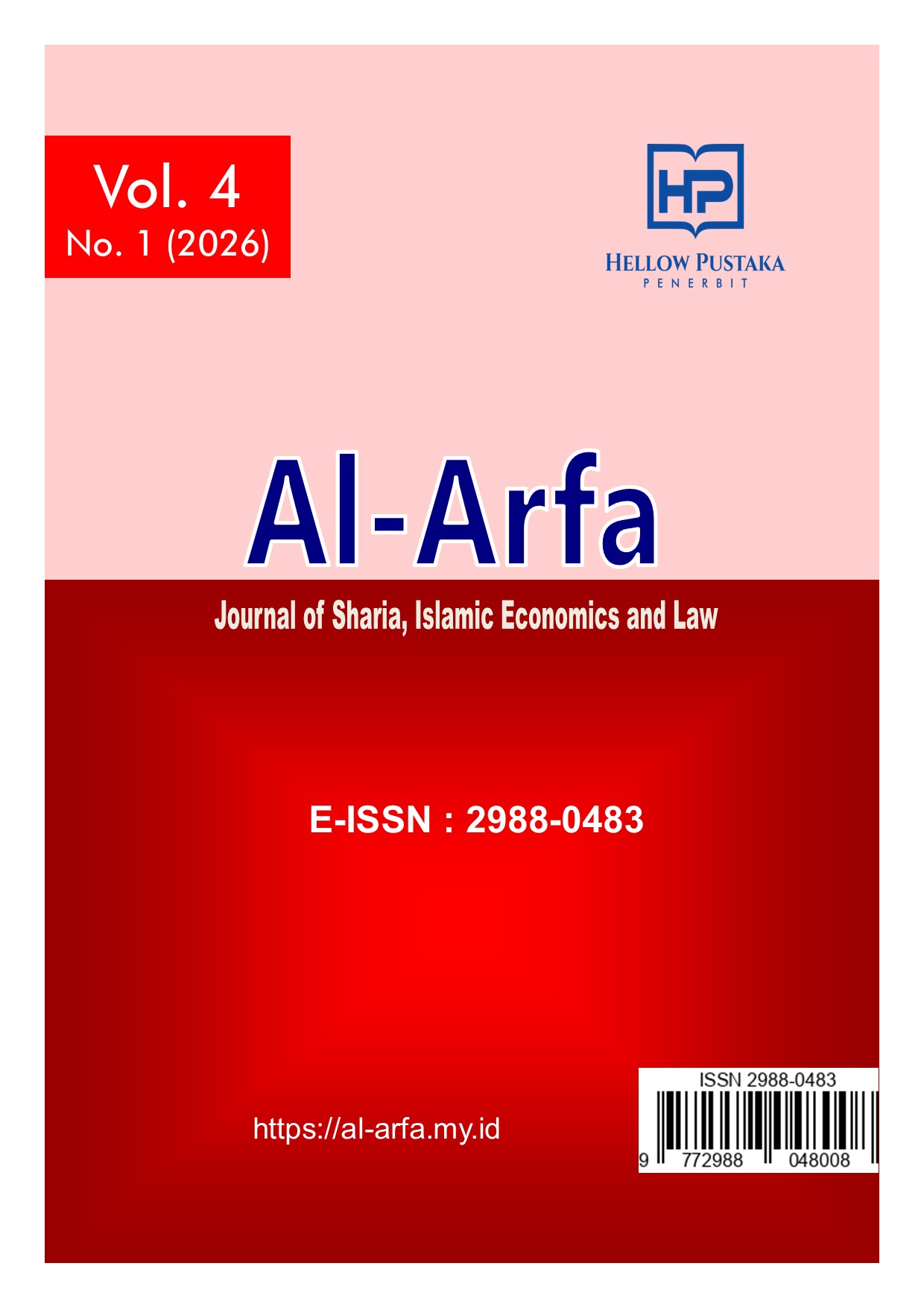
Downloads
Published
How to Cite
Issue
Section
License
Copyright (c) 2026 Saliu Yisa

This work is licensed under a Creative Commons Attribution 4.0 International License.